


Temple Audio Design Studio MOD
€259.00*
Prices incl. VAT plus shipping costs
(Free shipping from 49,-€ order value within Germany)

Delivery on request
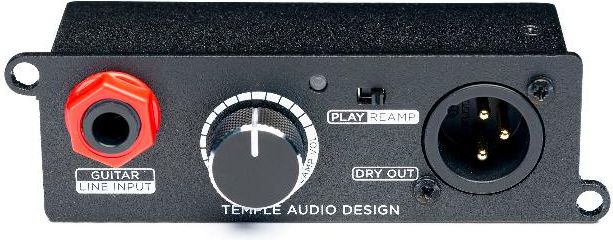
Multi-purpose studio-quality reamp and DI box that can be attached directly to the Temple Audio board
2-way play/reamp switch for selecting between playback via the pedalboard (and recording clean tracks) and re-amplifying the clean signal
Active input buffer ensures signal integrity
Balanced XLR output for recording clean tracks for subsequent re-amplification
Low impedance and balanced output ensures clear, crisp and uncoloured recording
Temple Audio designed the STUDIO MOD primarily as a re-amp device for receiving a balanced signal from your recording interface. This has evolved into much more! The active input buffer ensures the integrity of the signal and the DI provides a balanced XLR output for recording a high quality dry sound that is later used for re-recording.
With STUDIO MOD, your customers can record their guitar dry and later decide on the perfect amp, pedal settings and microphone placement. This makes recording stress-free and non-binding.
The STUDIO MOD is equipped with a first-class operational amplifier and offers a low-impedance and balanced output for clean and clear recordings.
Contact:
MUSIFACTS EUROPE BV
Hughersluys 23
NL - 4536 HM Terneuzen
E-Mail: info@musifacts.com
Web: https://www.musifacts.eu/
Login