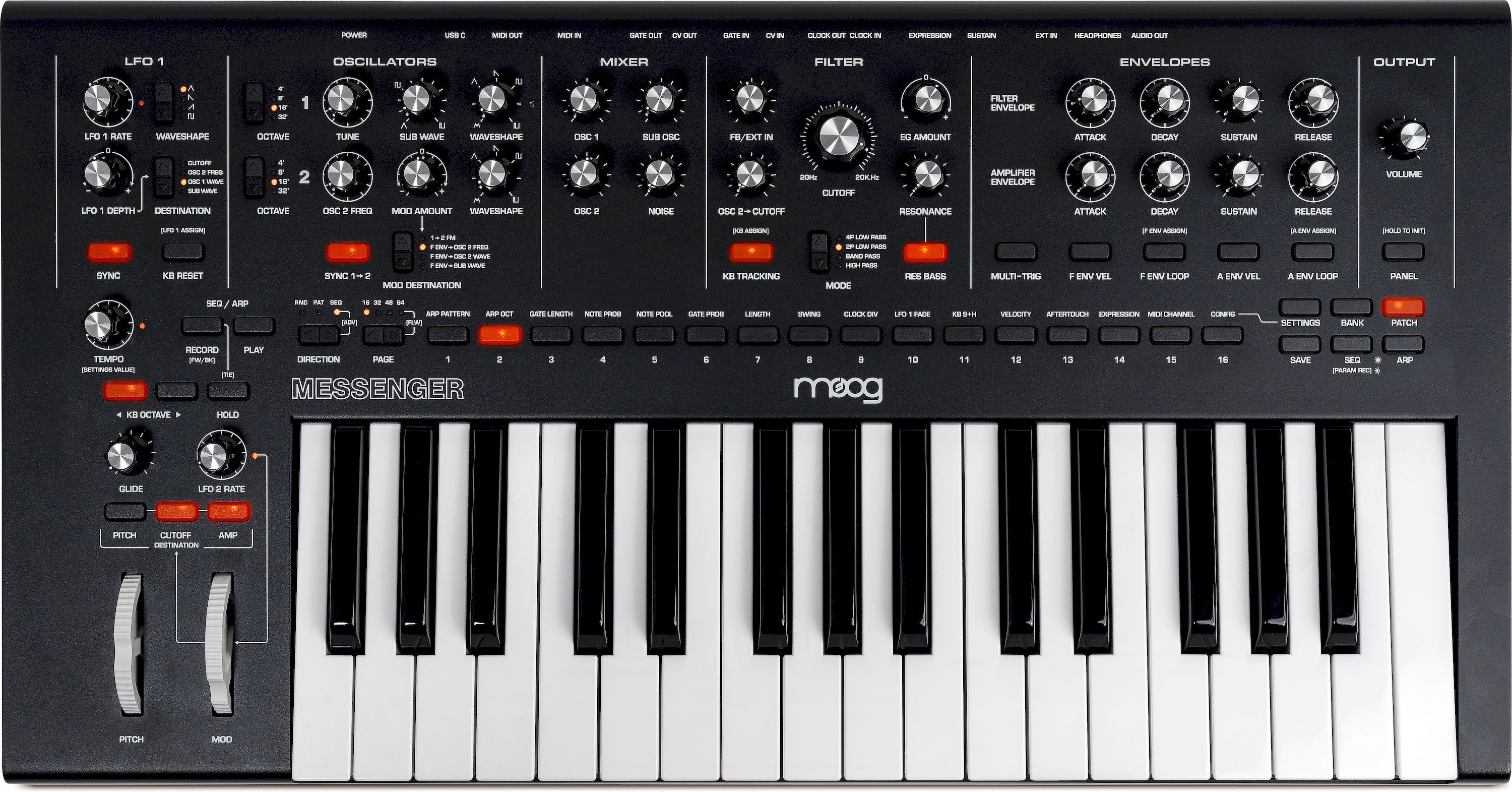
The Moog Messenger is a compact, monophonic analogue synthesizer of the next generation. It combines the classic Moog sound with modern features such as wavefolding oscillators, a variable sub-oscillator, dual looping envelopes, velocity-sensitive keys with aftertouch and an extended Moog ladder filter with multimode functionality. It is suitable for a wide range of sounds from lead melodies to basses and can be used both on stage and in the studio.
6 Voices from Heaven:With Artemis, the Greek boutique manufacturer presents another highlight in the company's 10-year history.The analogue six-voice sound generation of Artemis has two VCOs per voice with infinitely variable waveshaping, sync function, FM and PW. A sub-oscillator or noise can be added to the VCOs. The creamy low-pass filter can be switched between 12 dB and 24 dB and modulated directly via key tracking, envelope and oscillator or noise.The first-class algorithms from SINEVIBES are once again used in the effects section. The four stereo effect blocks for distortion/bit crush, modulation FX, delay and reverb can be used simultaneously to alienate or refine the sound.Thanks to a mod matrix, connecting external MIDI controllers is also no problem; controller data such as mod wheel, polyphonic aftertouch, velocity etc. can be conveniently assigned to the parameters. The device also supports the new MPE standard.USB-B port, MIDI I/O (5 pin DIN) stereo output and a headphone socket (all 6.3 mm TRS) are available on the connection side.
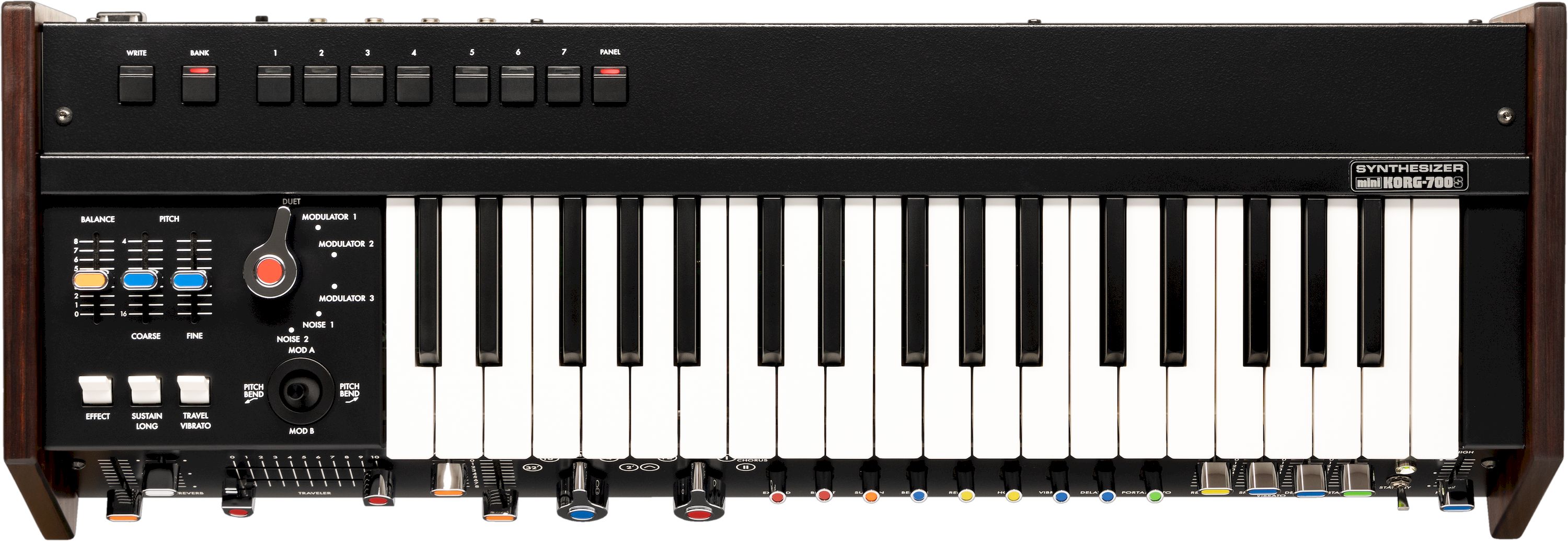
Following in the footsteps of the miniKORG 700S, the miniKORG 700Sm is a tribute to the legendary synthesiser of the 1970s. It adopts all the functions and features of the newly released miniKORG 700 FS, which was only available in a strictly limited edition. By using a compact slim-key keyboard, the size could be reduced to 86% of the original. With a weight of just 5.8 kg, the miniKORG 700Sm is also significantly lighter and therefore much more transportable than the miniKORG 700FS. The synthesiser combines the charm of the original with modern features such as a 37-key aftertouch keyboard, a joystick for pitch bending, a real spring reverb and a memory for your own sounds. The two oscillators make it possible to create powerful, distinctive bass and lead sounds in the style of its predecessor.As with the original, most of the controls are located below the keyboard, which makes operation intuitive. A special highlight is the iconic "Traveller Controller", which can create impressive wah-wah and other sound effects with its unique filter control.The miniKORG 700FS is also equipped with an arpeggiator, a USB port and MIDI IN and CV/Gate interfaces. The model is supplied with a soft case to protect the synthesiser during transport.
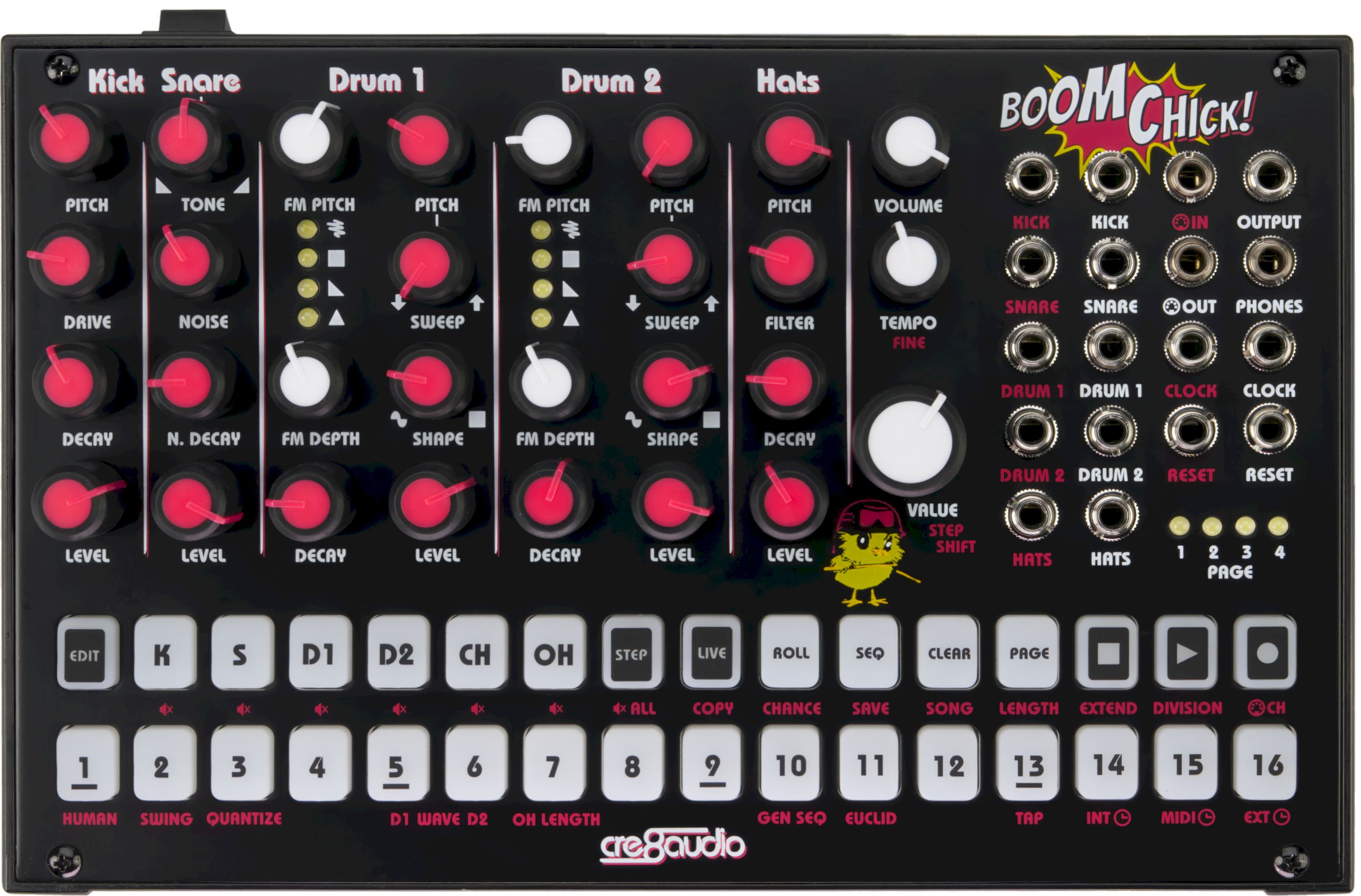
Boom Chick - Pure Analogue Drum MachineBoom Chick is a revolutionary analogue drum machine featuring Pittsburgh Modular's newly developed analogue drum circuitry. It combines expressive percussion sounds with an advanced sequencer for intuitive rhythm creation. The compact, powerful device offers direct control through a knob-per-function layout and is perfect for live performances and studio use.Handcrafted analogue circuitry from Pittsburgh ModularThe Boom Chick features five richly detailed drum voices with flexible sound settings. The sounds are raw, dynamic and precise, without complicated menus - just pure analogue beat creation
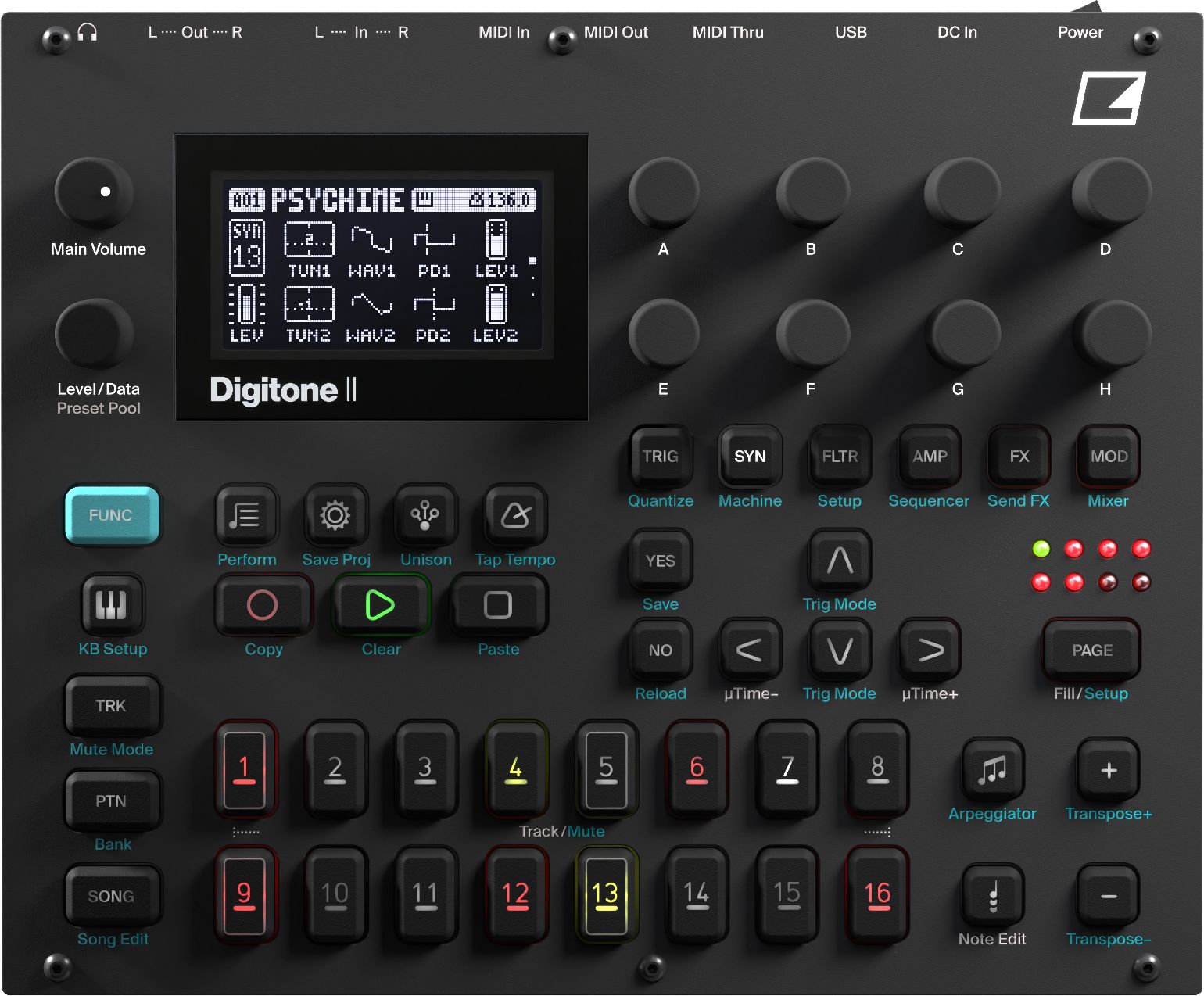
Pull your sound through the prism and into a spectrum of dazzling tones and timbres. Digitone II unleashes polyphonic dimensions of exciting sonic possibilities. The creative potential is crystallised in unique melodic synthesizer machines and also in rich percussive worlds. The 16 tracks can be used for any synthesiser machine or for MIDI, with 16 voices available for these selectable synthesiser machines. Twist and tweak a variety of parameters to playfully shape the soundscapes as they whisper or rage. Embedded in a modular workflow, you can explore and play the days and nights into oblivion. Try different interchangeable filters, apply a variety of effects, and shake up the movement and emotion of your sounds with some LFO fun. Put the advanced 128-step sequencer and Euclidean mode to work, dive into the note editor and arpeggiator, and much more. Connect your worlds. Realise your sound.
6 Voices from Heaven:With Artemis, the Greek boutique manufacturer presents another highlight in the company's 10-year history.The analogue six-voice sound generation of Artemis has two VCOs per voice with infinitely variable waveshaping, sync function, FM and PW. A sub-oscillator or noise can be added to the VCOs. The creamy low-pass filter can be switched between 12 dB and 24 dB and modulated directly via key tracking, envelope and oscillator or noise.The first-class algorithms from SINEVIBES are once again used in the effects section. The four stereo effect blocks for distortion/bit crush, modulation FX, delay and reverb can be used simultaneously to alienate or refine the sound.Thanks to a mod matrix, connecting external MIDI controllers is also no problem; controller data such as mod wheel, polyphonic aftertouch, velocity etc. can be conveniently assigned to the parameters. The device also supports the new MPE standard.USB-B port, MIDI I/O (5 pin DIN) stereo output and a headphone socket (all 6.3 mm TRS) are available on the connection side.
A unique stereo delay with an algorithm developed by 112db.com. The Echolocator is a handy precision tool that allows you to manually control small nuances in a very musical way. Like a bat exploring its surroundings in the dark, you can feel your way through your live performances and influence the behaviour and character of the delay on the fly. With 12 parameters for detailed sound design, memory/recall functions for all parameters, MIDI control for all parameters and an elegant aluminium housing that matches our compact desktop devices, the Echolocator lets your setup fly at any live show, in the studio or when experimenting with sound.
HI, MEET MUSE.This is Muse, the fourth Moog polysynth ever developed. It's an eight-voice analogue, bi-timbral, polyphonic synthesizer - the culmination of overthe culmination of over 5 years of dreaming, design and passion. Muse is an intuitive and powerful instrument that builds on Moog's rich history while looking boldly to the future.It is designed to be robust and portable for the stage, but also as the centrepiece of a modern studio.From your first playful encounter with the knob-for-function control panel, Muse matures with you through years of limitless exploration. Explore and express yourself endlessly with the digital controls for flexible modulation options, patch memory recall and advanced sequencing.Each sequence exists independently of a patch, allowing on-the-fly modification within the same musical concept.Equipped with parameter recording, probabilistic functions and microscopic editing of every note in the sequence, the sequencer is an endless playground for musical arrangements.The rich and nuanced history of analogue synthesizers is infused into every aspect of the architecture.Muse is designed to evolve, surprise and delight for years to come.
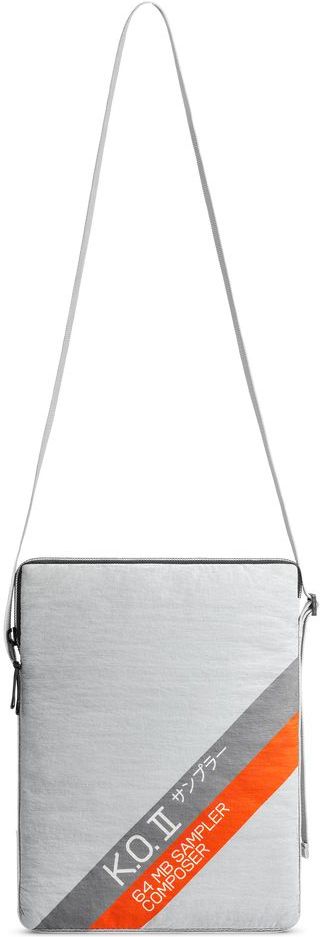
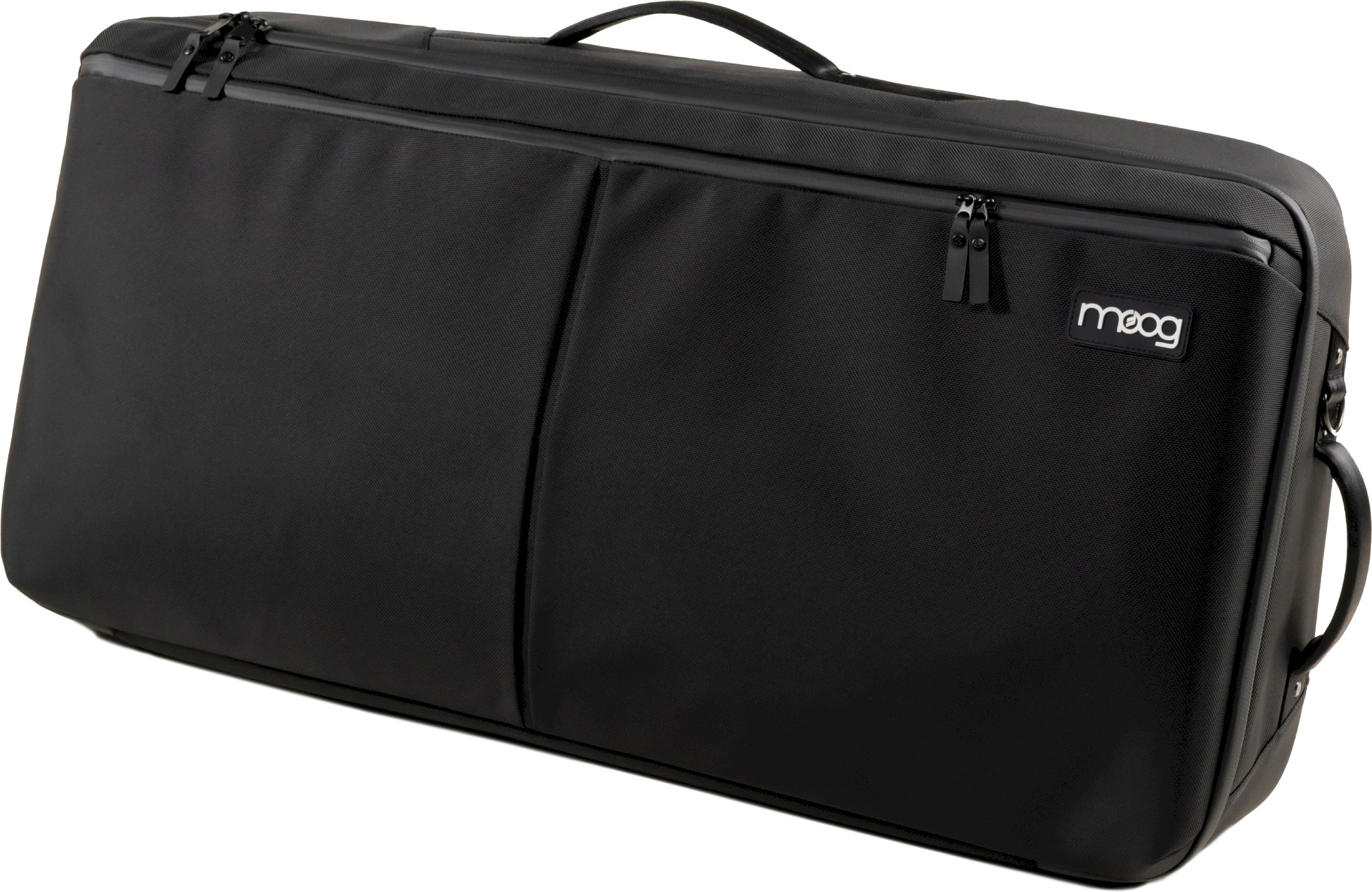
This customised soft bag made of lightweight nylon fabric with soft padding offers optimum protection for K.O. II. The bag comes with an adjustable strap and a printed K.O. II graphic on the front. The back is made of nylon fabric with a pocket for stowing accessories and cables.
The KRONOS is the ideal stage and studio instrument for anyone who needs maximum flexibility without compromising on sound quality, reliability and features. With no less than nine different sound engines, the KRONOS delivers high-quality sounds from all musical genres - and thanks to the huge and constantly growing number of additional sound libraries, it can be expanded again and again and tailored to individual requirements. The SGX-2 engine specialises in authentic concert grand and upright piano sounds, including the typical mechanical noises and resonances that acoustic instruments inevitably produce. A total of four different high-resolution concert grand pianos of German, Japanese and Italian origin are available ex works, each with 12 dynamic levels and with unlooped samples per key for an outstanding sounding piano experience. The EP-1 Engine is dedicated to the distinctive sound of classic vintage electric pianos with electromechanical sound generators such as reed plates or reeds. In addition to the typical background noises, suitable effect and amplifier models are also included, allowing the most legendary electric piano sounds in music history to be recreated effortlessly. The CX-3 Engine provides the player with an impressive reproduction of the KORG CX-3 tonewheel organ, whose drawbars can be operated intuitively via the nine faders of the KRONOS. Of course, suitable chorus, vibrato, drive and rotary effects are also included to complete the authentic organ experience. The Polysix EX engine is a detailed reproduction of the KORG Polysix analogue synthesizer, whose warm, full sound is predestined for musical genres from the 1980s and early 1990s as well as for more modern synthwave productions. The same applies to the MS-20 EX engine, which is a faithful adaptation of the iconic MS-20 analogue synthesizer from the 1970s, whose unique and aggressive sound is still an integral part of countless legendary electronic music productions today. The KRONOS' large TouchView display can even be used to create virtual connections on the MS-20's patch panel, allowing you to customise the signal path according to your own ideas. The AL-1 Engine is also available for further virtual-analogue sounds, with its complex possibilities and authentic-sounding oscillators and filters for velvety-smooth pads, assertive leads and punchy basses. With the STR-1 engine, the KRONOS offers comprehensive physical modelling sound generation, in which the sounds are generated and modulated in real time using physical models. This type of synthesis is particularly suitable for creating plucked and stringed instruments, whose virtual strings can be plucked, struck or bowed. The MOD-7 engine, on the other hand, specialises entirely in VPM/FM synthesis, which was particularly dominant in the music world of the 1980s, but has also recently experienced a real renaissance in the EDM sector. In addition to brilliant bells and legendary electric piano sounds, it can also be used to generate dynamic pads and ultra-deep basses. In addition, the six operators of the engine can be equipped with waveshaping or ring modulation oscillators as well as PCM samples, which guarantees almost infinite freedom when designing new sounds. "Last but not least, the HD-1 engine is a powerful sampling sound generator that can be used to create complex multisamples and play them over different keyboard and velocity ranges. This engine contains all sample-based sounds such as natural instruments, drums, percussion, choirs etc. and can also be used to play your own samples. The latter can either be loaded into the instrument via USB stick or created using the comprehensive internal sampler function. Separate audio and microphone inputs as well as an integrated USB audio interface are available for this purpose. The HD-1 engine also offers the option of wave sequencing, which is familiar from the classic KORG WAVESTATION from the 1990s and can generate rhythmic phrases and constantly changing pad sounds. All sounds created with these nine engines can be combined with each other within the Combi mode, either as dynamically playable layer or split sounds with up to 16 individual instances. Such extensive combinations can then be organised just like individual sound programs in clearly arranged, colour-coded set lists and can even be called up using a footswitch if desired. Thanks to the practical "Smooth Sound Transition" function, played sounds are not interrupted when the sound programme is changed, but continue to sound natural, even if the new sound is already being played. The powerful on-board sequencer offers 16 MIDI and 16 audio tracks and is therefore also ideal as a practical playback device for click and backing tracks on stage. An extensive and flexibly customisable effects section with a total of 16 effect slots (12 insert, 2 master and 2 total effects + 3-band EQ) is available for all areas, which can be used from a pool of 197 different effect types. The inspiring KARMA function, which is also on board the KRONOS, generates complex musical accompaniment phrases in real time, which can be intuitively controlled and adjusted using the faders and buttons in the controller section. For particularly expressive playing, the KRONOS provides a variety of playing aids and real-time modulation sources, including a velocity-sensitive keyboard with aftertouch, freely programmable faders, knobs and buttons, an X/Y joystick, an additional vector joystick and an intuitive ribbon controller.
Following in the footsteps of the titans, the KORG NAUTILUS utilises the nine sound engines of the KORG Kronos and guarantees a completely new and very clear operating concept. The simple and elegant design of the new synthesiser guarantees an excellent overview of all areas, quick access to excellent sounds as well as flexible functions and offers maximum ease of use. The sounds of the synthesiser are divided into three important categories and give the instrument an unmistakable character with standard, current and unique sounds. The latest generation of processors gets far more out of the nine advanced sound engines than has ever been possible before. The SGX-2 piano sound engine familiar from the Kronos has been expanded in the NAUTILUS with additional grand piano sounds and, in addition to customised adjustment of string resonances and a gradation into 12 different velocity levels, also offers the option of changing the hall acoustics of the respective instrumentof the respective instrument. The SGX-2 and all other sound engines, such as the EP-1 electric piano engine, the CX-3 drawbar engine, the HD-1 PCM engine, the MS-20EX analogue modelling engine, the PolysixEX modelling engine, the AL-1 analogue modelling engine, the MOD-7 VPM/FM sound engine and the STR-1 physical modelling engine as well as all associated parameters can be configured via the 7 large TouchView display with 800 x 480 pixel resolution or via the retractable rotary controls in the control panel. If you ever need help locating the right sound in the instrument, the search and preview function makes it easy to browse through all the sounds, which are based on over 1,770 multisamples. Your own favourite sounds and combinations that you often need can be saved in a favourites list using asterisks. This means you have your favourite sounds to hand in a flash. The NAUTILUS also offers six freely programmable Quick Access buttons, which can take you directly to certain menus or functionsor functions. Four preset settings and four user assignments are available here. A polyphonic arpeggiator with over 1,500 presets, a drum track with over 1,200 patterns and a step sequencer are available in every mode and enhance music-making in combination with the new sounds in a contemporary way. All settings can be perfectly configured for live use, saved and recalled later in set list mode. An indispensable function in live operation. The 16 effect processors and the 3-band EQ for each individual track are also easy to access thanks to the new operating concept. The expressiveness of a sound can also be perfectly adapted to the respective requirements using the separate Dynamics control on the control panel. This allows sounds to be played either very dynamically and elegantly or punchily with less dynamic range in an instant, making them more assertive. The instrument also comes with a download code for an extensive range of free additional software. In addition to KORG software instruments, this package includes the Ozone Elements software from iZotope, Reason Lite DAW software and the Skoove learning software.
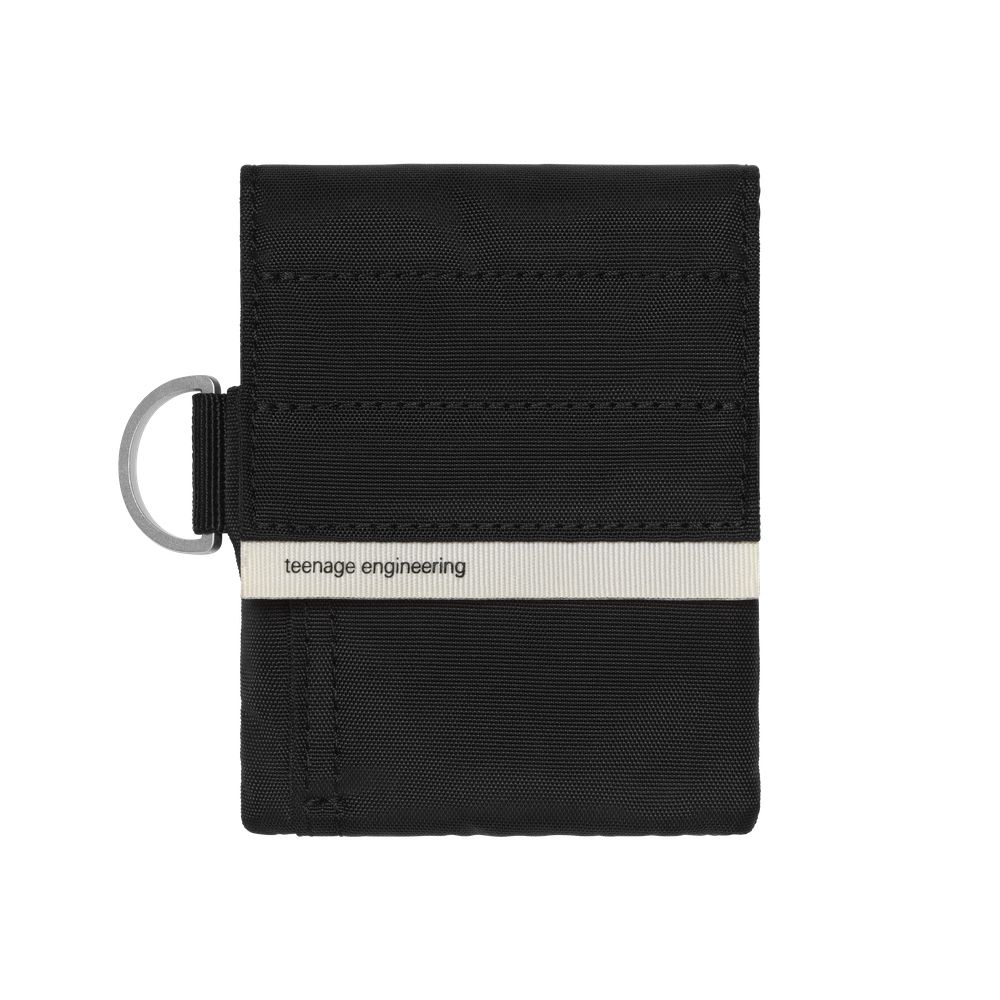
This small bag has many practical details that make it the ideal companion for the TX-6, TP-7 or CM-15. Cables and smaller items can be conveniently stored in the separate front pocket. The strap can be fastened with Velcro so that the bag can be carried in different ways: across the body, over the shoulder or around the waist.
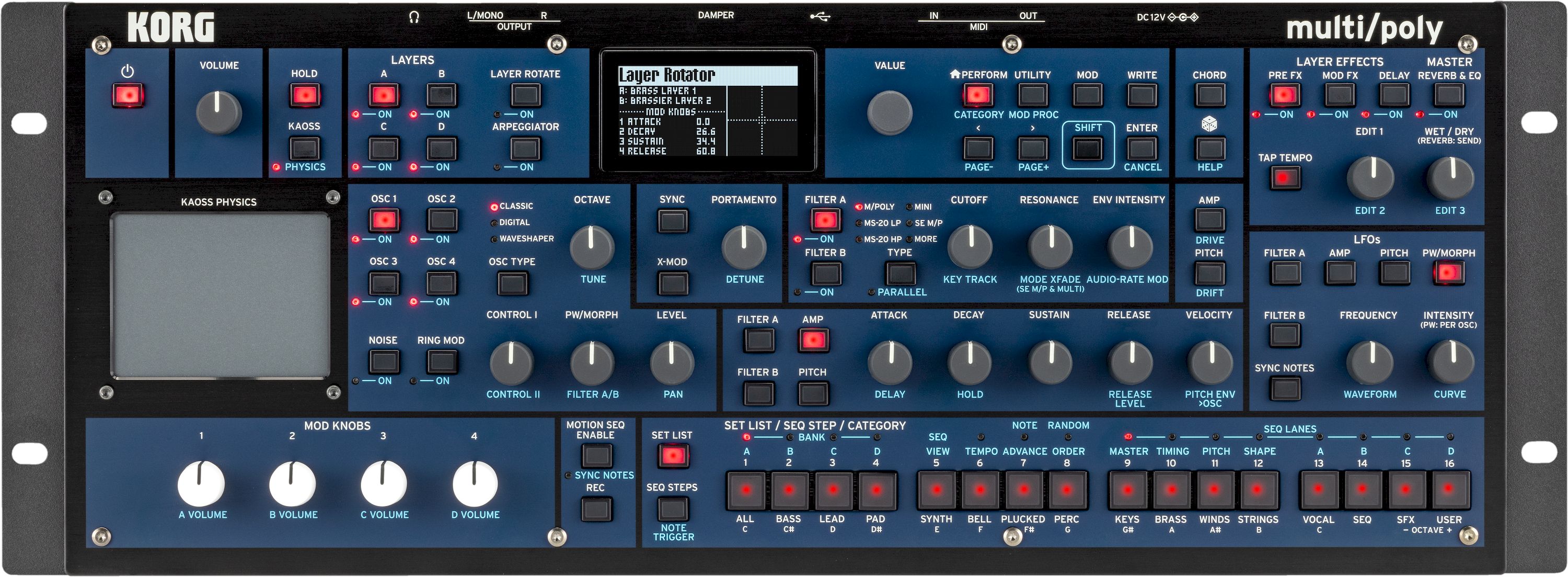
The multi/poly module from KORG draws inspiration from the legendary mono/poly analogue synthesizer from the 1980s, which was known for its big sound and experimental features thanks to its 4 oscillators, and transfers this concept into the modern age with the help of sophisticated modelling technology. It uses the latest generation of KORG analogue modelling, which, in addition to the detailed reproduction of classic oscillators and filters, for the first time also includes complete voice boards with the interaction of qualitatively different components, envelope generators and even portamento behaviour. In this way, the multi/poly module creates sounds that seem almost alive and have the typical "analogue" timbre. The available "Classic", "Digital" and "Waveshaper" oscillators, which can of course be freely combined with each other, offer a real playground for sound designers and synthesiser fans. Within a sound programme, 4 oscillators, a noise generator with its own filter and saturation as well as a ring modulator are available. In combination with the dual filter, the flexible cross-modulation known from the Mono/Poly, four loopable DAHDSR envelopes, five LFOs and six modulation processors, there are no limits to the imagination when creating sounds. Within a "Performance", up to four such sound programmes can be created as "Layer". "Split" or "Layer Rotate" sounds to create particularly complex timbres. ("Layer Rotate" is a function inspired by the classic mono/poly and switches between different sound programmes each time a button is pressed in "Round Robin" style) To animate these sounds, the "Motion Sequencing 2.0" function offers several independent sequencer tracks for timing, pitch, shape and four other parameters, each of which can be recorded as individual steps or in real time. As if that wasn't enough, the "Kaoss Physics" function provides additional, unique modulation options based on the physical model of a virtual ball that moves on a plane based on previously defined parameters and can be controlled or triggered using the integrated X/Y touchpad. This ball generates eight different modulation signals at any given time, which can affect almost any sound-shaping parameter. This creates complex modulations that are never exactly repeated and can be used particularly effectively in a live context. Three blocks with studio-quality effects as well as a master reverb and a master EQ round off the sounds accordingly. When switching between different sound programmes, the "Smooth Sound Transition" familiar from the KORG flagship workstations ensures natural-sounding transitions without tearing off the sounds or effects. An inspiring random function is available for creating new sounds, which randomises all or only certain sound-shaping parameters within a previously defined framework at the touch of a button, which can lead to completely new timbres or useful starting points for further sound experiments. With the exception of the pitch bend and modulation wheels, the multi/poly module offers the same controls as the keyboard version, allowing all parameters to be set directly on the device. The compact housing can be placed either in a 19" rack or on a desk, whereby two different installation angles can be selected for the latter variant. The connection sockets are positioned so that the cables are still accessible even if other devices are installed in the rack directly above the module. By supporting the MIDI 2.0 Property Exchange Standard, the multi/poly module also communicates independently with other MIDI 2.0-compatible devices such as the Keystage MIDI Controller, making time-consuming MIDI mappings a thing of the past. Free editor/librarian software for Mac and PC is also available for particularly convenient programming of the multi/poly module.
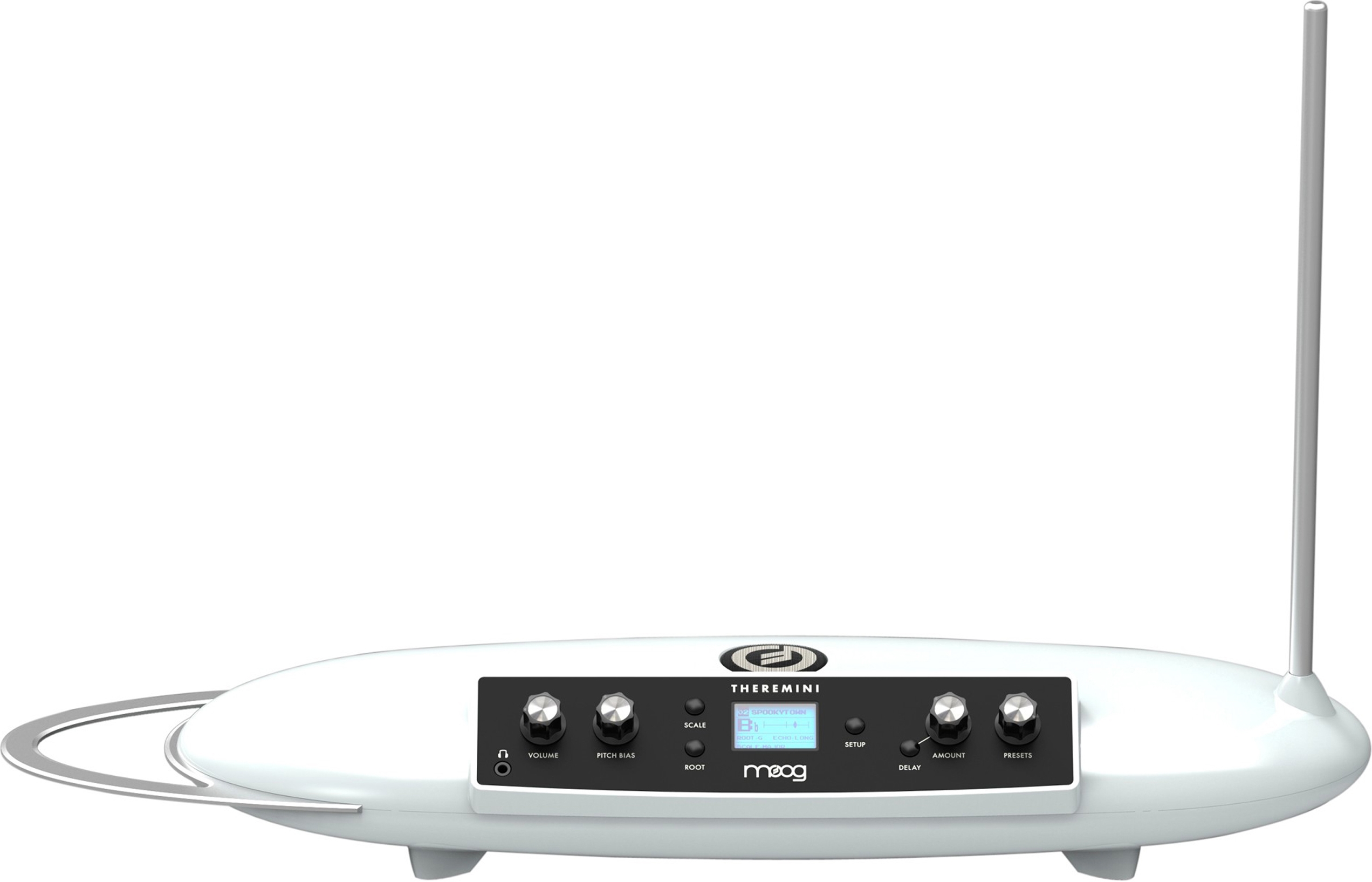
The new THEREMINI is the theremin of the 21st century! This classic instrument is known to be played touch-free by gestures in the air. Moog Music has now taken the traditional true analogue instrument to a new level with the help of modern digital technology: The sound generation comes from Moog's award-winning synthesiser app Animoog. The player is also provided with numerous valuable aids that finally enable a successful performance even without years of playing experience.
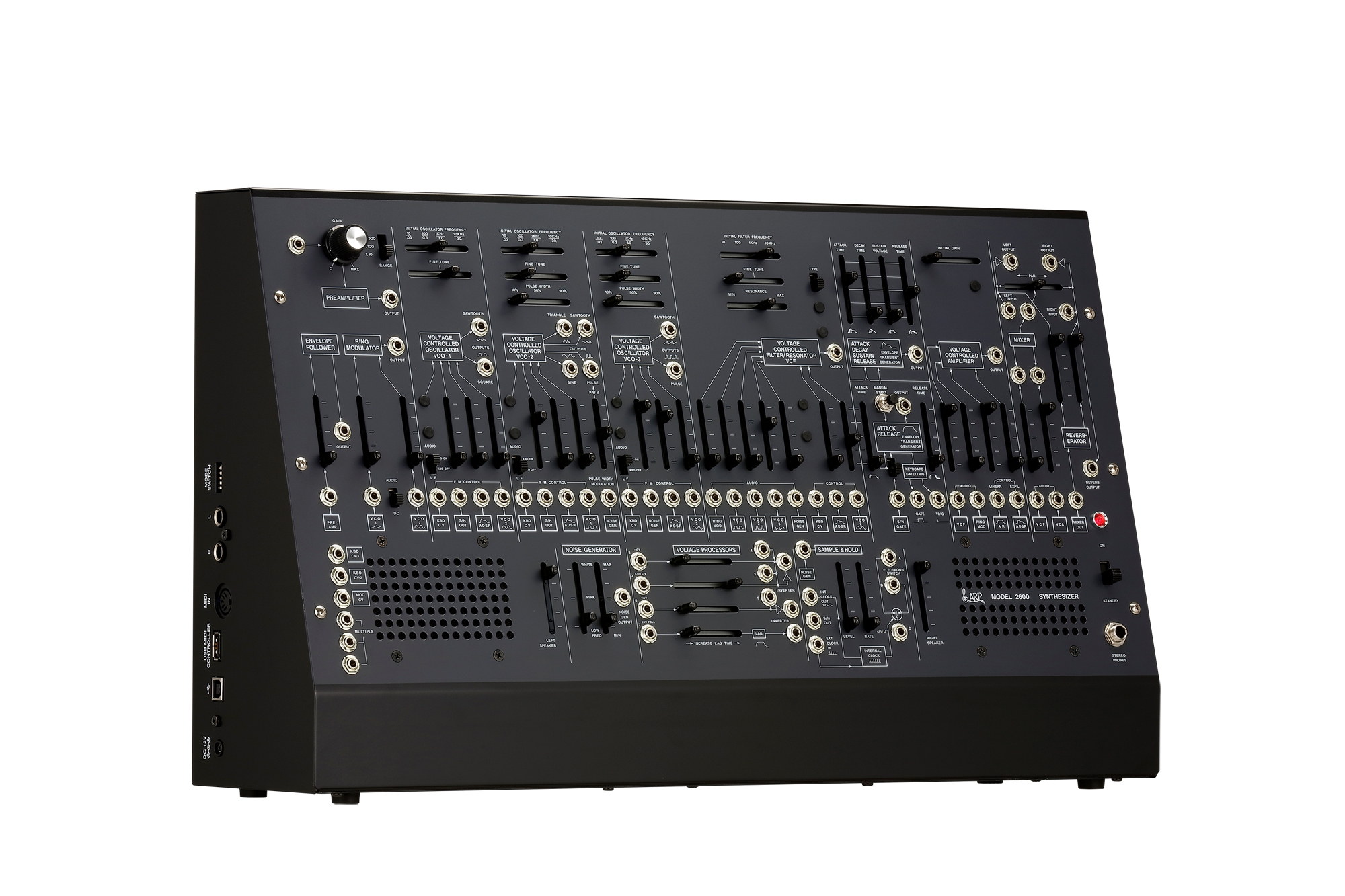
Hardly any other synthesiser enjoys such legendary status as the ARP 2600. Its unique sound, which has been immortalised in countless music productions, film scores and soundtracks for TV productions and video games since its introduction in the 1970s, is still an indispensable part of the music world today. Now this synthesiser legend is back - as a compact desktop module manufactured with the utmost care in Japan. Inside, the same analogue circuits and components are at work as in the new ARP 2600 FS edition, bringing the authentic ARP sound into the modern era. Even the analogue spring reverb and the internal monitor loudspeakers have not fallen victim to the reduction to approx. 60% of the original size and still do their job in the ARP 2600 M desktop module. The semi-modular analogue synth has also been equipped with some additional features that make it easier to integrate into modern recording and live setups. For example, the module has both filter types from the different versions of the original ARP 2600, USB-A and USB-B ports for direct connection of USB keyboards or USB-MIDI compatible devices, a DIN MIDI input, improved faders and balanced jack outputs (L/R). The control voltage for triggering the ADSR envelope has been adapted to modern standards so that the synth can be easily integrated into existing setups with devices from the volca series or Eurorack modules, for example. The case included in the scope of delivery ensures optimum protection and easy transport.To celebrate the rebirth of this legendary synthesiser, the first 1,000 units will be delivered with a transport case in a special colour and a KORG microKEY2-37 MIDI keyboard.
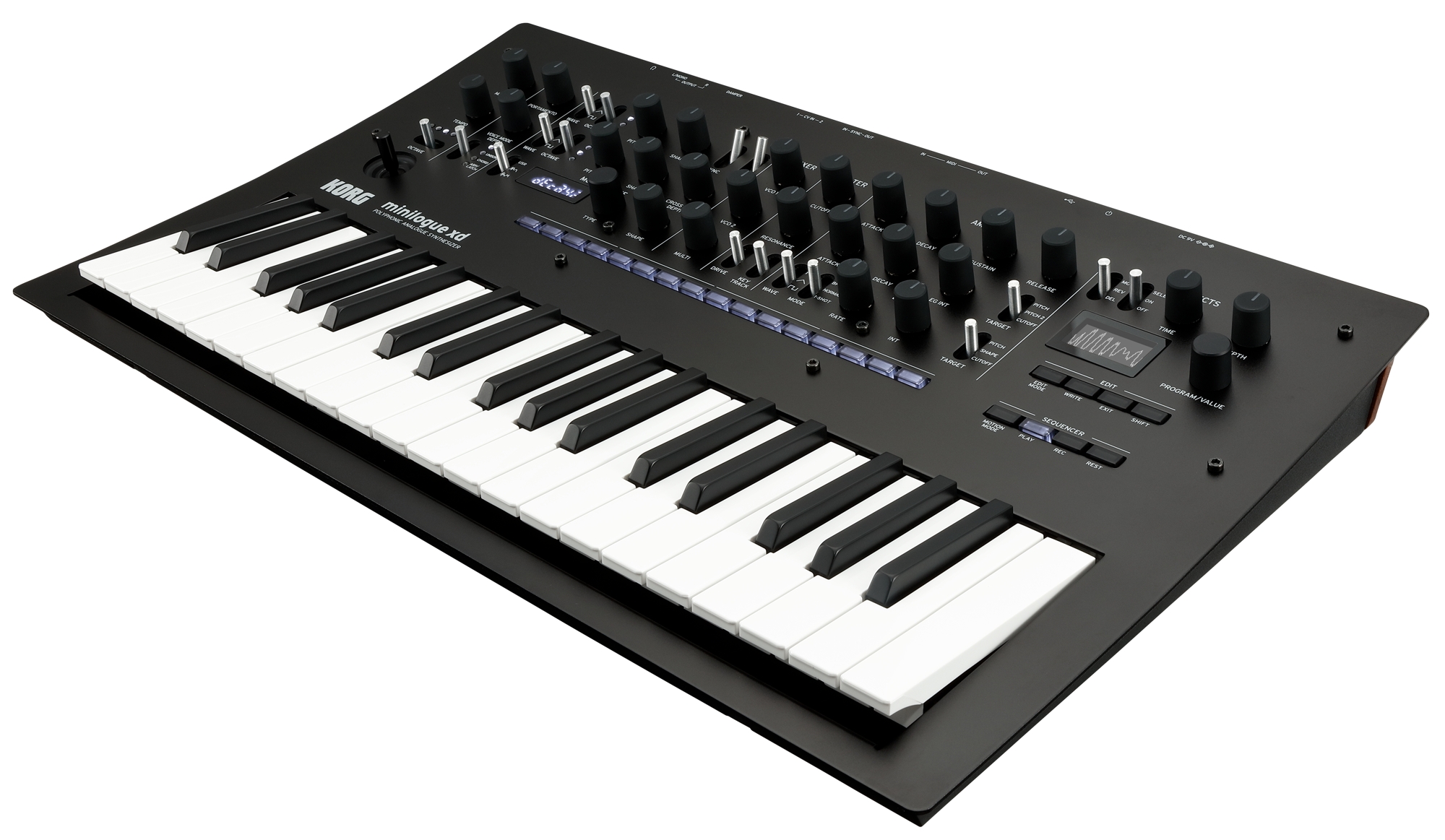
The KORG minilogue xd makes analogue synthesis instantly understandable and surprises with a wide range of spectacular, modern sounds. It combines the convenient format of the minilogue with the technical advantages of the prologue, such as the digital multi-engine, upgraded sequencer, effects and micro-tuning functionality.
The Moonwind MKII is a true analogue stereo filter and effects processor with a built-in step sequencer, a fantastic sounding digital effects chip, 2 LFOs and envelope modulation.
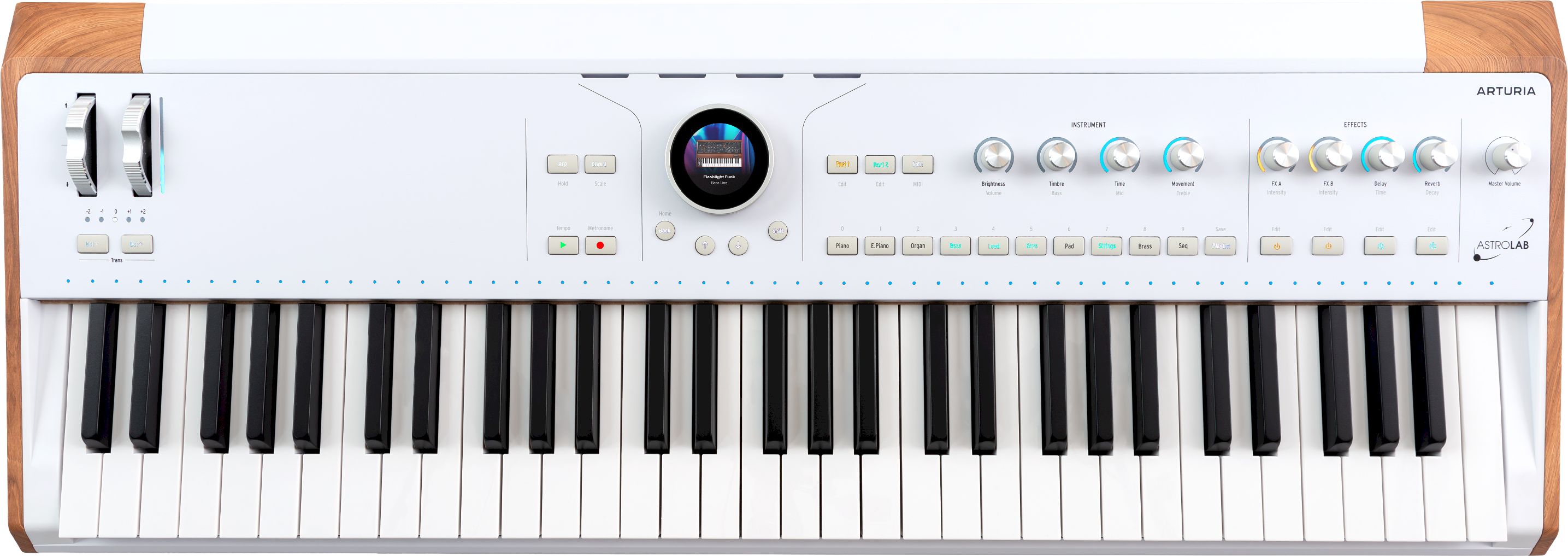
ARTURIA unveils the revolutionary AstroLab stage keyboard - a product of 25 years of innovation that redefines musical freedom. With its unique combination of software and hardware and advanced Phi/TAE technology, it offers access to over 1000 different sounds. Designed for producers and musicians, the AstroLab is characterised by its suitability for live performances. As a stand-alone instrument with 10 sound engines, it revolutionises the stage keyboard market with unsurpassed sound diversity and intuitive operation - a true innovation that unleashes musicality and sets new standards in the industry.NOW NEW WITH FIRMWARE 1.3:6 new instrumentsAcid V, MiniFreak V, Augmented BRASS and Augmented WOODWINDS as well as the revised Mini V and Wurli V engines from the V Collection X are now supported.290 new presets availableThe new features include 200 presets of the newly supported instruments and 90 tribute presets reminiscent of artists such as Tame Impala, Queen, Massive Attack, Radiohead, Talking Heads and Weather Report.Optimisations and bug fixesThe update improves the general performance of AstroLab and optimises the integration with Analog Lab to ensure smoother operation.
Touché SE is a high quality USB hardware controller with a gaming interfaceäsurface that rests on a patented mechanism that Mechanism that can be moved in several axes. Üthe fineümovement of this surfaceäthe user can interact with software interact with software instruments in a previously unknown way. A software package is supplied that already üover 200 optimisedüroptimised for the controller based on the UVI Workstation Engineäengine. These can beöimmediately after installation without third-party software.Touchés accompanying software Lié acts as a host forüfor any third-party VST plug-ins and allows you toöallows their parameters to be üvia multidimensional movements to touché to control them. Lié can be used as a standalone version or as a plugin in any DAW that supports VST or AU instrumentsüinstruments. Touché SE hasülike the classic Touché ühas four dimensions of movement: Pressure on the top, pressure on the bottom The underside and moving the playing surfaceäto the left and right. Up to eight plug-in parameters can be assigned to these four Dimensions in any combination. The value ranges and dynamic curves can be customised down to the last detail the respective requirements down to the last detail. A movement on Touché can cause massive sound changesächanges. As with any MIDI controller, the inputs to Touché can be recorded and played back 1 to 1. From Lié köso many Instances can beöinstances can be opened as the computer performance allows.
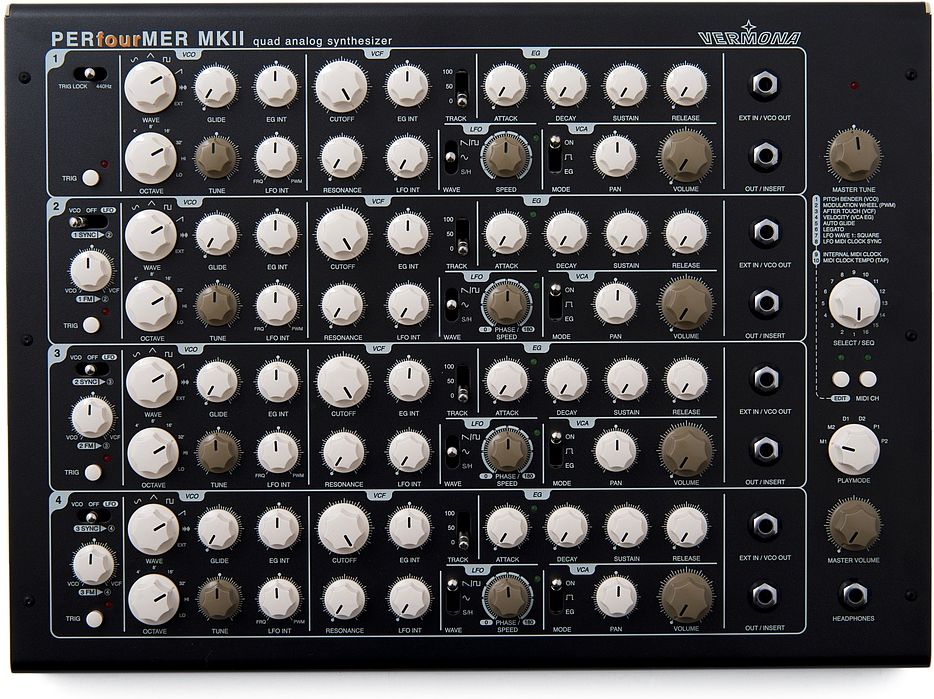
The VERMONA formula for maximum sound diversity: Synthesiser x 4=more than just four synthesisers!In fact, the PERfourMER MKII consists of four fully-fledged monophonic analogue synthesizers (synthesizer channels) that you can combine with each other as you wish to create both unusual and classic timbres.The synthesiser channelThe analogue oscillator with five waveforms and the noise generator generate the source material, which then passes through the musical 24 dB low-pass filter with adjustable resonance before finally being shaped in volume by the discrete VCA. Modulation sources are the extensively synchronisable LFO and the envelope generator with the control options attack, decay, sustain and release. This alone allows you to effortlessly create a wide range of different sounds of the highest quality. To make it as easy as possible for you on this sound journey, the PERfourMER MKII has a separate control for each function!The combination makes the differenceThe PERfourMER MKII shows its true potential when you combine several synthesizer channels with each other: whether with mutual frequency modulation or synchronisation, the PLAYMODE or ideally all together. The possibilities are endless and you decide whether you prefer to use the PERfourMER MKII as a four-voice synthesiser or as an orchestra of individual instruments.Digital or analogue controlThe PERfourMER MKII is equipped with a MIDI interface as standard. Do you prefer an analogue sequencer with CV and gate outputs? No problem, we can optionally equip your PERfourMER MKII with the corresponding inputs ex works.An instrument for eternityEvery PERfourMER MKII is manufactured, adjusted, tested and packaged by hand in our electro-acoustic manufactory in Erlbach: This is the only way we can fulfil our high quality standards and provide you with a reliable instrument.
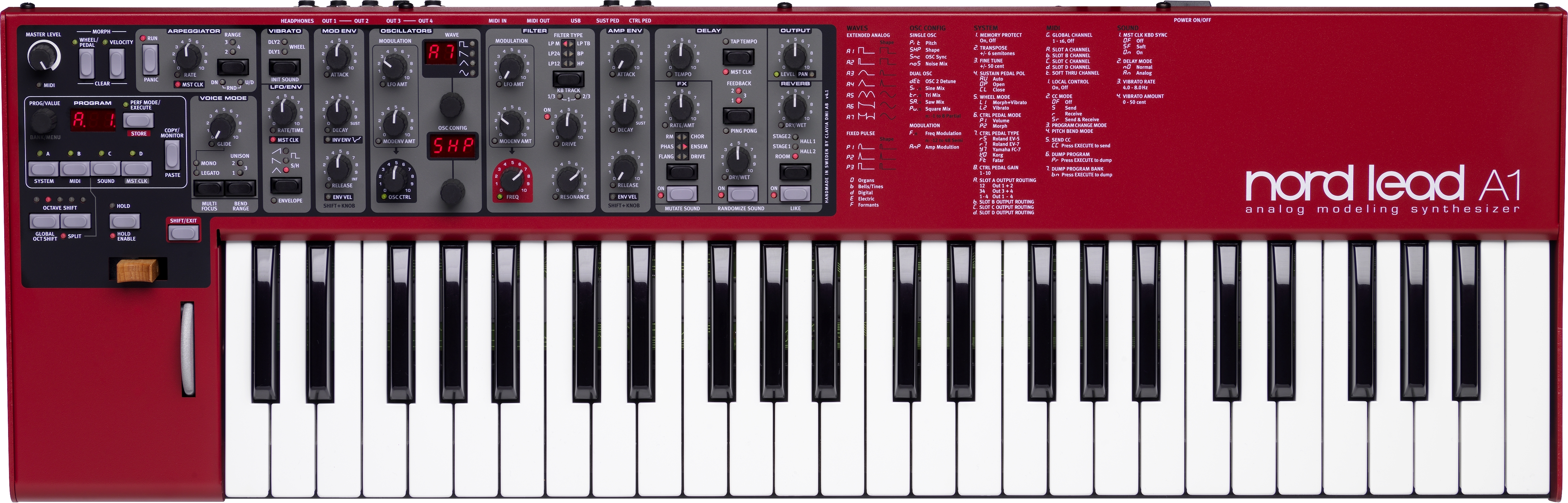
The Nord Lead A1 is an "analogue modelling synth" - not a software synthesizer, but a tangible instrument with 49 keys, featuring the manufacturer's best emulation skills to date and thus aiming to bring all kinds of analogue sounds back to life.The Nord Lead A1 combines the latest in-house modelling technology with a simpler interface compared to the Nord Lead 4. The synthesiser is able to accurately emulate the character of many old and sought-after synthesizers, while being flexible enough for studio and stage. All four parts of the sound generation provide their own effects processor and a morphing function, the latter allowing several parameters to be set in motion in real time. A polyphony of 24 voices is offered. At this point, we would like to refer you to the desktop version (without keyboard) called Nord Lead A1R.
Touché is an innovative instrument that starts where conventional playing aids stop. With Touché, you can expand your existing hardware and software synthesisers with a single stroke by adding a wealth of previously unheard-of expressive possibilities. Unlike other multidimensional controllers, however, you don't have to learn a new instrument to achieve inspiring results early on - Touché is intuitive and easy to get started with. Play with one hand as usual on a keyboard. Use the other to create your performance with percussive rhythms, rising and falling tones or slides and vibratos. The haptic feedback of the patented Touché mechanism gives you a direct, physical playing experience that is otherwise only familiar from acoustic instruments. The controller's high-quality wooden skin reacts to even the lightest of touches and recognises four parameters simultaneously: pressure on the front, pressure on the back and movements to the left and right. To optimise the playing feel to your preferences, not only the sensitivity of the sensors but also the mechanical resistance of the hardware can be infinitely adjusted. Thanks to CV, MIDI and USB output, Touché is compatible with virtually any synthesiser. Ready-made sound presets and/or parameter assignments are already included in the Lié accompanying software for a number of well-known hardware and software synths. However, you can also determine which MIDI CC messages and control voltages Touché should send and customise their value ranges, polarities and velocity curves in great detail. The Lié accompaniment software, which is perfectly integrated for Touché, is available as a standalone app as well as a VST and AU plug-in, but is also a host for VST plug-ins. This allows you to save the sounds of your favourite softsynths together with the appropriate mappings within Lié and restore your setup with a single click. Do you want to use Touché directly on your hardware synths without a computer? No problem: once configured, 24 mapping presets can also be stored directly in the controller and called up via the hardware. So that you can start playing immediately without configuration, over 200 factory sounds are included that have been specially customised for Touché's comprehensive control options. These are available directly after installation within Lié. In addition to your computer, all you need is a MIDI keyboard.
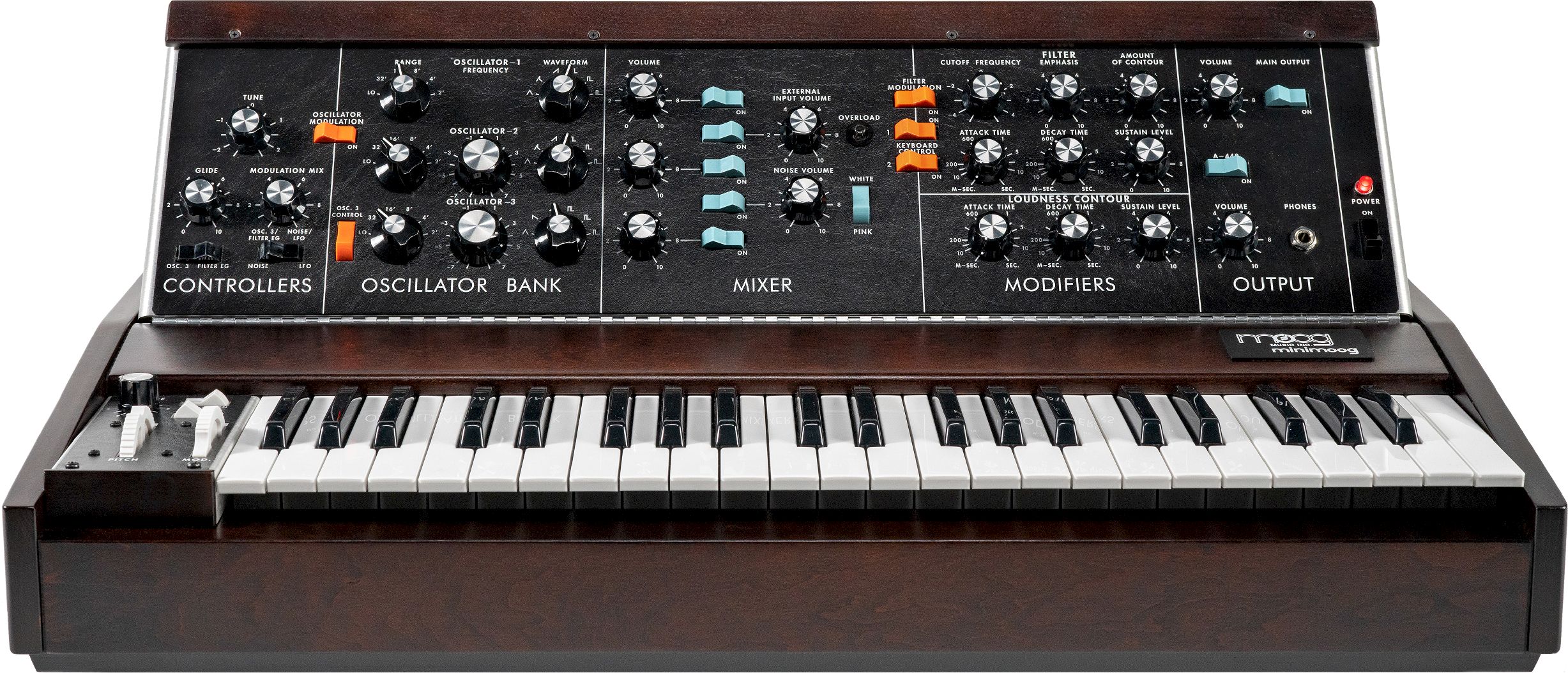
Released in 1970, the Minimoog Model D was the world's first portable synthesiser and served as a model for all subsequent electronic keyboards. The all-analogue instrument was well received because it combined the colossal sound of the modular Moog synthesizers from the 1960s with the accessibility of pre-wired modules - meaning it could be played instantly and intuitively without the need for patch cables. The instrument was quickly adopted by a wide range of artists, including Herbie Hancock, Kraftwerk, Rick Wakeman, Sun Ra, Piero Umiliani, Giorgio Moroder, Bernie Worrell and Gary Numan, who used it to create unique sounds and new musical genres.More than half a century after its invention, the Minimoog Model D is once again in production at the Moog factory in Asheville, North Carolina. An exceptional sonic tool and one of the most popular and iconic synthesisers ever created, it returns to the hands of synthesists of all kinds and serves as an inspiration for the next generation of electronic musicians.The monophonic, three-oscillator analogue synthesizer is housed in a cabinet made from local Appalachian cherry and a handcrafted aluminium enclosure. The legendary low-pass ladder filter, powerful oscillators and rich, saturating mixer sound as lively and deep as ever. The exact arrangement of components and the consistent design of the Minimoog Model D from the 1970s have been retained.While no changes have been made to the original sound engine or audio signal path, the Minimoog Model D 2022 includes a number of popular functional modifications that expand the sonic possibilities of this legendary instrument. These modifications include a dedicated analogue LFO with triangle and square waveforms, a high-quality Fatar keybed with velocity and sustain accessible via top panel CV jacks with integrated trim pots, MIDI integration and a mixer feedback modification that allows the Minimoog Model D to overdrive and screech by turning a knob. And for the first time in its history, the Minimoog Model D features a spring-loaded pitch wheel with a centre deadband for improved playability and wild performance effects.
Modular mayhem for all!The motto of the young, unconventional company from Nevada sets the direction. Cre8audio have set themselves the goal of integrating modular synthesisers into everyone's productions and setups cheaply and easily. To this end, the team develops and builds clever and extremely affordable Eurorack hardware solutions, their own modules and accessories. Cre8audio also impresses with a sexy look that stands out from the often somewhat dull Eurorack monotony.In purely technical terms, Cellz is a dual unipolar control voltage generator: each of the 16 touch-sensitive pads can be set to two 12-bit values (semitone quantisation or free scaling), ranging from 0V to 5V. "Feeding Cellz" clock or LFO pulses are automatically triggered and cycled through each cell. This allows the user to create their own sequences.However, Cre8audio prefer to call Cellz a "funky module you can use as a controller or to make a wacky sequencer".
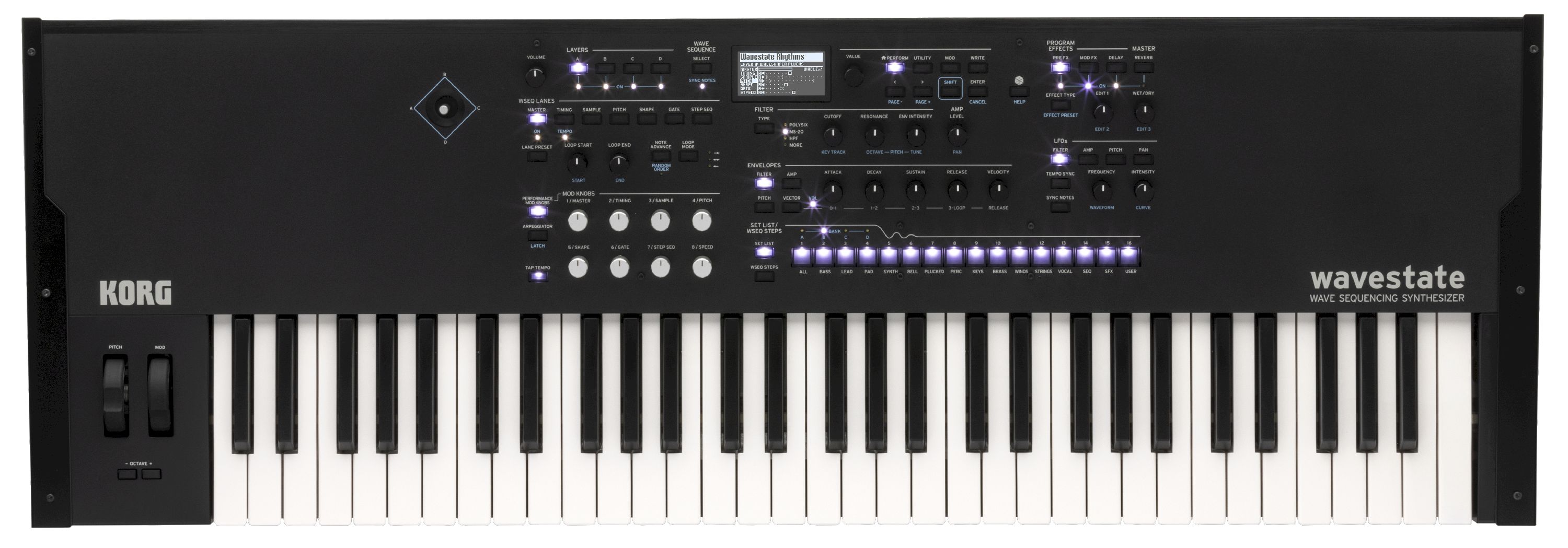
With its unique Wave Sequencing 2.0 sound generation, the original wavestate, which saw the light of day at the 2020 NAMM Show, became a celebrated star on the synth Olympus virtually overnight. The wavestate SE is the top version of the digital synthesiser, featuring a larger keyboard with 61 keys and aftertouch as well as an elegant yet sturdy metal housing that not only gives the instrument a particularly high-quality look, but also easily withstands the rigours of everyday touring. In addition, the polyphony of the instrument has been extended to an incredible 120 stereo voices. The factory sounds of the original wavestate have been optimised for the new aftertouch function and expanded to include numerous additional sounds. The wavestate SE thus offers the ultimate wave sequencing 2.0 experience, in which samples are strung together in step sequences to create organic, constantly changing or even rhythmic sounds. With its sophisticated lane structure, performance layers consisting of up to four different sound programmes (including custom effects and arpeggiators), a huge selection of different filter types, high-quality effects, clever random functions and an almost limitless modulation matrix with over 1,000 modulation destinations, the wavestate SE is a true synthesis monster that can create incredibly complex, seemingly never-repeating soundscapes. The wavestate SE is already equipped with several gigabytes of samples ex works, which form the source material for its unique sounds. But that's not all, it also offers 4 GB of memory for your own user samples, which can be transferred to the instrument using the free wavestate sample builder software. And to ensure that the elegant synth is always well protected when travelling, it comes with a matching hard case.